

Quick answer
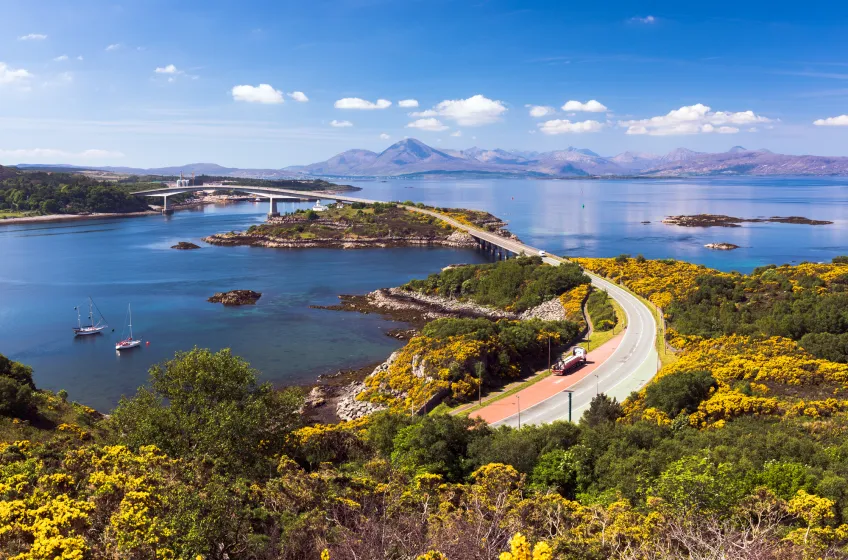
The Isle of Skye is reached from Edinburgh entirely by public road, and the route is free — no gate, no entrance fee, and no closing time, with access running 00:00–23:59 every day of the week. The island has been joined to the mainland by the Skye Bridge since 1995, so the crossing itself no longer depends on a ferry timetable.
The bridge onto Skye was, until December 2004, a toll crossing — per mile, one of the most expensive in Europe. It was freed after a decade of organised non-payment, court summonses and fines borne by local drivers. That history explains the single most useful fact for anyone asking how to get to isle of skye from edinburgh: the crossing now costs nothing at all. There is no gate, no barrier, no ticket office and no closing hour. Access runs 00:00–23:59, seven days a week, because there is nothing to open or shut. What the traveller is dealing with, then, is distance rather than admission. The mainland approach runs past Loch Lomond, across Rannoch Moor and through the walls of Glencoe, on toward Fort William and the western seaboard at Kyle of Lochalsh. Much of the journey is the point. Skye itself — An t-Eilean Sgitheanach in Gaelic — is not one destination but a long, fingered island of separate districts. Portree holds the middle. The Trotternish ridge and the Old Man of Storr rise to the north. The Cuillin and Sligachan dominate the south. Arriving on the island is simple. Deciding which part of it to arrive in is the harder question, and it shapes everything else. That free access — no gate, no fee of any kind — removes the question most visitors expect to face and replaces it with quieter ones. Vehicle, daylight, distance covered, and how many nights the traveller is prepared to give the Highlands: these are the variables that decide whether a trip works. An Isle of Skye tour from Edinburgh answers them on the traveller's behalf; an independent Edinburgh to Skye road trip leaves them open. The geography does not change either way. Road conditions in the western Highlands do change, sometimes at short notice, and VisitScotland publishes current travel notices at visitscotland.com — worth a look in the days before departure rather than the morning of. Anyone still weighing how to get to isle of skye from edinburgh should read the route as part of the destination, not as the price paid for it. The sections that follow break down the practical detail: the specific corridors, the timings, the seasonal considerations and the costs involved.
“Arriving on the island is simple; deciding which part of it to arrive in is the harder question.”
How to Get to Isle of Skye from Edinburgh
The Isle of Skye is reached by road either over the Skye Bridge or by taking the Mallaig–Armadale ferry and continuing across Skye. From Edinburgh, the simplest self-drive option follows the A9 north, then the A82 toward the west Highlands before joining Skye; rail travellers usually combine train and ferry via Fort William and Mallaig.
Edinburgh to the A9 via Perth, then A82 to Skye Bridge at Kyle of Lochalsh
Edinburgh to Skye via coach services on the west Highland route and Skye Bridge
Edinburgh Waverley to Mallaig, then CalMac ferry to Armadale (Skye)
Mallaig to Armadale ferry, then road onward on Skye
Edinburgh to Mallaig via A9 and A82, then ferry to Armadale
How to Get to Isle of Skye from Edinburgh: Realistic Journey Plan
This plan suits visitors making the Edinburgh–Skye run for the first time, whether returning the same day or staying over. Allow roughly 5 to 5.5 hours of driving each way, which fills a 14-hour day if you turn around, or splits comfortably across two days.
Leave Edinburgh early
Set off from the city before commuter traffic builds on the M9. An early start is what makes a same-day return possible at all.
First break near Callander
Stop for fuel, coffee and a leg stretch after roughly 90 minutes, before the road narrows through the Trossachs. Facilities thin out considerably beyond this point.
Glencoe pause
Pull in at the Glencoe Visitor Centre or one of the marked roadside viewpoints for 20 to 30 minutes. This is the natural halfway marker and where most overnight travellers decide whether to push on.
Fort William stop
Break for lunch and restock, around three and a half hours in. Fort William is the last sizeable town before the final stretch north.
Cross to Skye
Continue via Invergarry and Kyle of Lochalsh, crossing the Skye Bridge at Kyleakin. Expect slow single-track sections and caravan queues in the final hour.
Arrive Portree or Broadford
Reach Skye with daylight left for a short walk or coastal drive. Same-day returners should turn back by mid-afternoon; overnight visitors gain a full free day here.
Overnight option unwinds the day
Staying in Portree, Broadford or Kyleakin removes the 11-hour round trip from a single day. Most visitors choose this once they see the driving time honestly.
How to Get to Isle of Skye from Edinburgh: Best Time to Travel
Late spring and early autumn are the best windows for getting from Edinburgh to the Isle of Skye if you want fewer weather disruptions and long enough daylight to keep the drive comfortable. Summer gives the most margin for delays because the days are much longer, while winter works best only with an early start and a slower plan.
Late spring (April to June)
moderate crowds, easier road timing8–13°C, longer daylight, mixed showers
A good balance of daylight and manageable conditions. Roads are still road-trip friendly, and you have more time to absorb delays without losing the day.
Summer (July to August)
busiest travel period12–19°C, longest daylight, variable rain
Best for daylight, not for quiet roads. Start early so you can make the most of the light and avoid arriving late after a long drive.
Early autumn (September to October)
lighter demand, steadier rhythm8–14°C, shorter days, cooler winds
Often a strong compromise for travel conditions. You still have useful daylight, but with less pressure on roads than in peak summer.
Winter (November to February)
quietest, slowest-going2–6°C, shortest days, frequent dark driving
Choose this only if you are prepared for reduced daylight and slower progress. Early departures matter most in these months.
Weekday mornings
less traffic, calmer departure—
If your schedule is flexible, leaving early on a weekday is the easiest way to reduce congestion risk and keep the route moving smoothly.
Verdict: Best slot: Tuesday to Thursday in late spring or early autumn, with an early morning departure.
How to Get to Isle of Skye from Edinburgh: Trip Cost Basics
The route itself is free, so the realistic cost is what you pay to travel: fuel or a rental car, coach or rail fares, and any ferry leg if you choose the rail-plus-ferry option. If you split the trip with an overnight stop, lodging can become one of the largest extra costs.
How to spend less
- Book rail and ferry early
- Travel off-peak where possible
- Compare coach vs rail-plus-ferry
- Share car hire and fuel
A budget traveller might spend around £40-£90 per person one way, while a more comfortable trip with flexible fares and an overnight stop can run £120+ per person.
How to Get to Isle of Skye from Edinburgh: Practical Travel Tips
Here are practical planning tips that help the Edinburgh-to-Skye trip run more smoothly without repeating the route basics.
Start early
Set off in the morning so you have daylight buffer for stops, photo breaks, and any weather-related slowdowns. On a long Highland drive, that extra margin is more useful than trying to recover time later.
Book ahead
If you are using coach or rail-linked travel in peak months, reserve as early as you can because services can fill before the last-minute window. This is especially important if your plan depends on a tight transfer onto onward transport.
Watch weather updates
Check Traffic Scotland, Police Scotland travel advice, and the Met Office before you leave, then recheck if conditions change en route. Transport Scotland advises allowing extra time, taking an alternative route if needed, and not continuing past closure signs.
Keep fuel high
Do not wait for the tank to get low before the western Highlands stretch. Transport Scotland specifically advises keeping fuel levels high to cover unexpected delays and higher fuel use than usual.
Plan your breaks
Build in proper pauses rather than squeezing the drive into one push. Transport Scotland recommends at least 15 minutes after every two hours of driving, which also helps you stay alert on narrower rural roads.
Pack snacks
Carry water and simple snacks so you are not dependent on a quick stop at the exact moment you need one. That matters more on a route where services can be spaced out and timing can slip.
Leave a buffer
If you are connecting from another Edinburgh arrival, avoid same-hour onward plans. A modest gap protects you from train delays, road works, and slower traffic around pinch points.
How to Get to Isle of Skye from Edinburgh: Pre-Trip Checklist
A few practical confirmations before you leave Edinburgh will keep the run to Skye straightforward, since there is no gate, fee or ticket on the route itself.
-
Decide your route before departure — Settling on the A82 or A9 corridor in advance avoids mid-journey rerouting.
-
Reserve accommodation if splitting the trip — Portree, Kyle of Lochalsh and Fort William beds sell out well ahead.
-
Book seats or hire car early — Coach seats, rail tickets and rental vehicles have limited Highland availability.
-
Download offline maps of the Highlands — Mobile signal drops out across long stretches of Lochaber and Skye.
-
Pack a car charger or power bank — Navigation apps drain a phone fast over a long single-day drive.
-
Check for road closures and roadworks — Single-track sections and bridge works can add unplanned detours.
-
Carry photo ID and driving licence — Hire desks, ferry check-in and accommodation all ask for it.
-
Note the free official reference site — https://www.visitscotland.com/ carries current Highland travel advisories.
Check availability
Frequently asked questions about getting to Isle of Skye
Everything you need to know about how to get to isle of skye from edinburgh